crazy ramblings;-)
The question of certainty has been troubling people for a long time. "The more you know, the less you understand" (Lao Tse). "The only true wisdom is in knowing you know nothing" (Socrates). Or more recently:
It might be well for all of us to remember that, while differing widely in the various little bits we know, in our infinite ignorance we are all equal.
(Karl Popper, 1963)
However, to the modern enlightened mind this all sounds rather silly. Surely the amazing technological prowess of humanity, and
the ever increasing speed of progression, is proof of our fundamental understanding of reality. Moreover also evidence that reality is indeed something tangible and comprehensible.
But is this really so?
Under closer inspection problems actually start to appear on at
least four fronts: the nature of reality, the foundations of science,
the consistency of formal systems and additional hints coming from
modern neuroscience.
1.)
The uncovering of realms of reality that are radically different
to our classical and common-sense world doesn't help. Even if we have become used to ideas like wave-particle duality, superposition, entanglement (non-locality), uncertainty, the flow of time
depending on velocity and gravity, an upper limit for the speed of light, discreetness of energy, etc. they are not very comforting notions.
Richard Feynman and Niels Bohr are both attributed to have said something like: those who are not shocked when they first come
across quantum theory cannot possibly have understood it. Feynman even
adds:
"I think I can safely say that nobody understands quantum
mechanics."
"Modern physics has conquered domains that display an ontology that cannot be coherently captured or understood by human reasoning." the philosopher Ernst von Glasersfeld once remarked.
I believe these assertions are still relevant today. And it gets
worse if we consider that we apparently are only aware of a fraction of
what is going on in the universe. Like the mysterious stuff called dark matter that is estimated to roughly make up 25% of the universe.
And dark energy, basically an anti-gravitational force associated with
an energy content of empty space, is made responsible for the
observed accelerated expansion of the universe (this observation won the physics Nobel Prize last year). This energy is estimated to make
up 70% of the universe, although no one has a deeper understanding of what is really going on. So we are left with a humbling 5%, we
call our universe.
And the apparent the fine-tuned nature of our universe (
http://en.wikipedia.org/wiki/Fine-tuned_Universe) and ideas like
the anthropic reasoning really start to ask big questions.
Even such fundamental notions as time appear problematic on closer inspection. For instance, most physical processes are thought to
be time-symmetric. The best explanation for the perceived asymmetry
in time, the arrow of time, is that the initial state of the universe
had a very low-entropy. Which prompts the next question, which is an unsolved problem in physics: why was this so? And more bizarrely,
the notion of time itself disappears in fundamental theories of
physics.
See:
http://j-node.homeip.net/wfb/research%20archive/favorite/time.pdf
http://www.quantumphil.org/presentations/Is%20there%20time%20in%20the%20QW.pdf
Also, there are quite a few experiments appearing to show a
violation of causality, a cornerstone of a reality that makes sense:
http://arstechnica.com/science/2012/04/decision-to-entangle-effects-results-of-measurements-taken-beforehand/
www.gapoptic.unige.ch/wiki/_media/publications:bib:pra42115.pdf
Perhaps things like these prompted physicists and philosopher,
Heinz von Foerster, at the age of 90, to remark the following in an interview, when the interviewer, matter-of-factly, mentioned
reality:
"Wo ist die Realität? Wo haben sie die?" ("Where is this reality? Where do you have it?")
http://www.youtube.com/watch?v=XSu3RZCgQpU#t=1h15m17s
(By the way, this excerpt is part of a very interesting
documentary, called "Das Netz" by Lutz Dammbeck, about the Internet, the
Unabomber, and LSD. See also:
http://video.google.com/videoplay?docid=-2987597553010783230)
Von Foerster also once said: "Objectivity is the illusion that observations are made without an observer."
The above mentioned issues all relate to the fundamental workings
of reality; things we cannot directly observe. However, there is also
the intrinsic tendency of the universe to spontaneously self-organize
and form structures, on many scales, around us. The notion of
emergence nicely points this out: as soon as isolated components start to interact and form a system, there is a new level of organization
that appears, which is not visible in the characteristics of the components. The whole is literally more than the sum of its parts. Why reality has this feature and what is driving this
organizational force is an open question.
And talking about open questions:
http://j-node.blogspot.ch/2010/04/few-questions.html
2.)
The edifice of science appears to be floating in empty space,
lacking any foundation. Philosophical attempts like logical empiricism and critical rationalism failed to find ultimate justifications for science. It turns out to be very tricky to answer the questions,
what a law of nature is and what constitutes knowledge.
"The foundations of physics have started moving [...] and this
motion has caused the feeling that the ground would be cut from science" Werner Heisenberg once said.
Thomas Kuhn's very influential work on the history of science,
called "The Structure of Scientific Revolutions", introduced the ideas of paradigm shifts and incommensurability. Over which Max Planck
mused:
"New scientific truth does not triumph by convincing its opponents
and making them see the light, but rather because its opponents
eventually die, and a new generation grows up that is familiar with it".
And Steven Weinberg radically observed:
"If the transition from one paradigm to another cannot be judged by any external standard,
then perhaps it is culture rather than nature that dictates the content
of scientific theories".
The influential philosopher of science, Paul Feyerabend who spend
his last years at the ETH in Zurich, claimed that there is no such
thing as a scientific method. The slogan, "anything goes!", introduces
his idea of scientific anarchy.
But wasn't science about logic, objectivity and rationality?
"The supreme task of the physicist is to arrive at those universal elementary laws from which the cosmos can be built up by pure deduction. There is no logical path to these laws; only intuition, resting on sympathetic understanding of experience, can reach
them" Einstein once said.
Moreover, what is science? One could argue that a big part of
science is about the "translation" of natural systems into formal thought systems, namely mathematics, and back. The mathematician John L.
Casti writes in his book "Alternate Realities: Mathematical Models of
Nature and Man":
"This book is about [...] the means for encoding specific
realities into definite formal systems and the procedures for interpreting
the properties of the formal system in terms of the given real world situation".
It appears deceptively simple, but at heart the mathematical
framework of most physical theories deals with symmetry. Or invariance under symmetry transformations. See Emmy Noether's theorems in classical mechanics, for instance the requirement of invariance with respect
to time (experiments should give the same results, regardless of when people chose to do the experiments) leads to the conservation of energy.
General relativity, a theory expressed in a geometric language (differential geometry) simply requires the invariance of objects (tensors) with respect to the choice of a coordinate system. This common-sense requirement, called covariance, combined with
something called the equivalence principle, in principle suffices to derive
the best theory of gravity we know of. And the remaining three forces
of nature next to gravity are all expressed as quantum fields. It was
an amazing achievement in the history of physics, that obviously unrelated forces could be unified into one overarching theory,
called the standard model of particle physics. This unification was
achieved by imposing a specific mathematical symmetry principle (gauge symmetry) and requiring invariance with respect to it. General relativity and the standard model are the most accurate physical theories known to us. Indeed, new particles were discovered solely motivated by the consistency requirements of the standard model.
After all the success, it is really a very big disappointment that still today we are no closer to having a unified theory of
physics. Three decades ago, Stephen Hawking famously declared that a
"theory of everything" was on the horizon, with a 50 per cent chance of its completion by 2000. In 2010 he gave up and now believes there is
no such thing.
Again it is amazing, that such a simple idea, fusing gravity with
the three quantum fields, would turn out to be such an intractable problem. All the string/M-theory hype, with its momentous
framework of new mathematics, has fizzled out and we appear to be stuck with a
deep puzzle with little to no experimental guidance. Interestingly, if
the Higgs boson recently detected at the LHC turns out to be exactly
the one predicted by the standard model, no new insights are gained.
Only if it turns out to be a different kind of beast, there is hope
that the universe is giving us an empirical hint in what direction the new physics, which we know must be out there, must lie.
All of this also begs for the question, why are formal thought systems, devised in the inner worlds of consciousness, so
intricately and intimately related to the external reality we wake up in every day?
The Nobel Laureate Eugene Wigner, in his essay "The Unreasonable Effectiveness of Mathematics in the Natural Sciences", attempted
an answer:
"[...] the enormous usefulness of mathematics in the natural
sciences is something bordering on the mysterious and [...] there is no rational explanation for it."
"[...] it is not at all natural that 'laws of nature' exist, much
less that man is able to discover them."
"[...] the two miracles of the existence of laws of nature and of
the human mind's capacity to divine them."
"[...] fundamentally, we do not know why our theories work so
well."
(
http://www.dartmouth.edu/~matc/MathDrama/reading/Wigner.html)
In the same vein more Einstein: "The most incomprehensible thing
about the world is that it is comprehensible", "the fact that it is comprehensible is a miracle". Hawking wrote in "A Brief History of Time": "What is it that breathes fire into the equations and makes
a universe for them to describe?"
More on laws of nature and the associated problems:
A 2010 workshop at the Perimeter Institute for Theoretical Physics was about "Laws of Nature: Their Nature and Knowability"
http://www.perimeterinstitute.ca/Events/Laws_of_Nature/Laws_of_Nature:_Their_Nature_and_Knowability/
The videos of the talks:
http://pirsa.org/C10001
A Scientific American blog post: "Deep in Thought: What is a 'Law
of Physics' Anyway?"
http://blogs.scientificamerican.com/observations/2010/06/04/deep-in-thought-what-is-a-law-of-physics-anyway/
Indeed, there is another "miracle" that allows us to comprehend a
big chunk of reality. It is concerned with the complex systems
mentioned above in the context of emergence. Unfortunately, when things
start to get complex, i.e., when there are many interacting agents, or if
there are dissipative effects (like friction) leading to non-linear behavior, analytical expressions break down. Like the three body problem. Fascinatingly, when our formal systems fail or become impracticable, reality is kind enough to give us a big help: what looks like complex behavior in a system is the result of simple
rules of interaction of its components. Like swarming behavior:
http://en.wikipedia.org/wiki/Swarm_behaviour#Models
There are many examples of simplicity on the micro level leading
to emergent complexity on the macro level. Like Stephen Wolfram's cellular automaton rule 110, the only rule out of 256
possibilities that results in a pattern that is neither completely random nor completely repetitive. Or John Conway's Game of Life. Fractals,
like the Mandelbrot set, are also defined by a very simple iterative equation, however, yielding an amazing amount of complexity and self-similarity. Things called multi-scale Turing patterns are reminiscent of structures found in biological systems.
The observation, that complexity comes from simple interactions,
led Wolfram to exclaim the following:
"[The] results [that simple rules give rise to complex behavior]
were so surprising and dramatic that as I gradually came to understand them, they forced me to change my whole view of science [...]."
"It took me more than a decade to come to terms with this result,
and to realize just how fundamental and far-reaching its consequences are."
Wolfram is quite a remarkable character. A child prodigy and multimillionaire due to the development of Mathematica, arguably
the most comprehensible mathematical software. Based on his insights working with cellular automata, he decided to write the massive
and very controversial book "A New Kind of Science", claiming that
physics has been misguided to follow an analytical, equation-based path
and should focus more on the computational aspects of reality. It took
him a decade to finish and it touches nearly every topic imaginable.
Watch his TED talk called "Computing a Theory of Everything":
http://youtu.be/60P7717-XOQ
3.)
Mathematics also breaks down on closer inspection. The great mathematician David Hilbert optimistically set out to provide a
secure foundation for all mathematics. However, very unexpectedly, Kurt
Gödel proved with his incompleteness theorems that mathematics has holes
in it. Basically, in maths (i.e., systems including basic arithmetic) there are statements that cannot be proven to be true or false.
Like Georg Cantor's continuum hypothesis in set theory, where different "sizes" of infinity are analyzed (called the most important
unsolved problem in mathematics by Hilbert). Gödel showed that you can
never prove that the continuum hypothesis is false. Later Paul J. Cohen showed that you can never prove that the continuum hypothesis is true.
Unanswerable questions in what was thought to be the purest intellectual endeavor? This does not help either. Perhaps not very incidentally, many great mathematicians fell into the abyss of insanity. The BBC had an interesting documentary on this, called "Dangerous Knowledge", telling the tragic stories of Georg Cantor, Ludwig Boltzmann, Kurt Gödel and Alan Turing, who all committed suicide:
http://video.google.com/videoplay?docid=-8492625684649921614
It gets worse. Alan Turing showed that there are things that can
never be computed. There are no instructions you can give a computer
that will enable it to decide in advance whether a given program will
ever finish its task and halt. To find out whether a program will eventually halt, you just have to run it and wait. He called this the halting problem.
And, finally, the death blow by mathematician and computer
scientist Gregory Chaitin. He continued where Turing left off and showed
that mathematicians can't actually prove very much at all.
Some of the sings he said:
"Doing maths is just a process of discovery like every other branch
of science: it's an experimental field where mathematicians stumble upon
facts in the same way that zoologists might come across a new species of
primate."
"Mathematicians are simply acting on intuition and experimenting
with ideas, just like everyone else."
"Most of mathematics is true for no particular reason."
"Maths is true by accident."
"Randomness is
the true foundation of mathematics."
http://www-2.dc.uba.ar/profesores/becher/ns.html
Using Chaitin's incompleteness theorem one can demonstrate Gödel's second incompleteness theorem:
"So if we could prove math is consistent, we'd know it's not!"
http://johncarlosbaez.wordpress.com/2011/10/06/chaitins-theorem-and-the-surprise-examination-paradox/
So anarchy, not order, is also at the heart of mathematics.
4.)
Finally, I would like to add modern neurosciences. One thing is that perception is less about a passive recording of reality but more about an active construction of it.
For instance, things like selective attention (I love the gorilla video
http://youtu.be/vJG698U2Mvo), synaesthesia, chronostasis and the McGurk effect.
A multitude of optical illusions reveal that even a supposedly simple task, like seeing color, is in fact highly context-dependent and a constructed sensation. "The sky isn't actually colored at all. Rather, it's your mind that's colored." researcher
Beau Lotto explains
here. In more detail:
And yet color is the simplest sensations the brain has. What may
surprise you is that even at this most basic level we never see the
light that falls onto our eyes or even the real-world source of that
light. Rather, neuroscience research tells us that we only ever see what
proved useful to see in the past. Illusions are a simple but powerful
example of this point. Like all our perceptions, we see illusions
because the brain evolved not to see the retinal image, but to resolve
the inherent 'meaninglessness' of that image by continually redefining normality,
a normality that is necessarily grounded in relationships, history and
ecology. Which is why we innately find regularities in information and
reflexively imbue those regularities with value. But it is the value,
not the information itself we see. So, tomorrow morning when you open
your eyes and look "out into" the world, don't be fooled. You're in fact
looking in. You're not seeing the world covered in a blue blanket at all; you're seeing a world... an internal map of value-relations derived from interactions within a particular, narrow context.
Lotto muses: "indeed, to literally 'see yourself see' is in my view the principle act
of consciousness, which has the power to transform one's view of the
world and of oneself". He also advocates the postmodern concepts (see more below) of uncertainty and readjustments: there is constant conflict and ambiguity in our perception of reality, and the core concept is actively redefining normality, effectively celebrating uncertainty.
Prompted by
Lotto's TED talk, others commented in the same vein in
this feature by the Huffington Post. For instance
Ben Thomas:
In light of all this, it's hard to escape the inventor Ray Kurzweil's conclusion:
"We don't actually see things [at all]; we hallucinate them in detail
from low-resolution cues." As Beau Lotto explains in his presentation,
we're hallucinating reality all the time -- but we only take notice when
our hallucinations fail to make accurate predictions; when we think
we're certain of something that's actually not so certain, and our
brains have to hunt down new information in order to make better
predictions.
And again the theme of uncertainty:
Claude Shannon once said,
"Information is the resolution of uncertainty." The more certain we are
in our hallucinations, the less information we think we need -- and the
less open to new information we become. Beau Lotto finishes his talk on
a similar note. "Only through uncertainty," he says, "is there
potential for understanding."
Also enforced in this context by
Tom Cornwall:
We all like to think that we are right. And we will often go to great
lengths to persuade others that our view is the right view. But what
Beau Lotto reveals in his powerful TEDTalk on optical illusions is that
the reality is very different. He shows that our reality is merely a
perception and, as Beau puts it, "the light that falls on your eye is
meaningless". Or in other words what we see is merely our perception of
reality. What's interesting is not just the way in which our mind can be
tricked by these playful optical illusions but also how this affects
our day-to-day decisions, our behavior and the world we live in.
He goes on to give examples of how simply changing the font color in tests measurably influence the outcomes. More of this can also be found in Daniel Kahneman's, book
Thinking, Fast and Slow.
He is a Nobel Laureate
and founder of behavioral economics. Fellow behavioral economist Dan Ariely has also
written a lot about this.
But this is only the tip of the iceberg. The ideas become a lot more radical. Like Thomas Metzinger, a philosopher of the mind, who goes to great
lengths to assert that experiencing a self is an illusion and
a construct of the mind, in his recent book
The Ego Tunnel: The Science of the Mind and the Myth of the Self.
Finally, we have only talked about "normal" perception. Neuroscientist David Eagleman has the
following to say. First regarding this normal mode of perception:
You're not perceiving what's out there. You're perceiving whatever your brain tells you.
We do not see with our eyes but rather with our brains.
Our brains sample just a small bit of the surrounding physical world.
This is all why we would never
"stop to think that there is more beyond what we can sense."
Instead of reality being passively recorded by the brain, it is actively constructed by it.
There are thoughts you cannot think.
The exact levels of dozens of neurotransmitters are critical for who you believe yourself to be.
He then continues:
Waking perception is something like dreaming with a little more commitment to what's in front of you.
What we call normal perception does not really differ from
hallucinations, except that the latter are not anchored by external
input.
This also implies that consciousness-altering drugs create a reality which is actually just as "real" as "reality" itself.
Aldous Huxley , author of
The Doors of Perception, once answered an interview question about who should try LSD with:
Well I think the people who would benefit most of all are professors.
I think it would be extremely good for almost anybody with fixed ideas
and with a great certainty about what's what to take this thing and to
realize the world he's constructed is by no means the only world. That
there are these extraordinary other types of universe.
Regarding dreams, Metzinger also has something interesting to say, namely about the experience of
dreaming about waking up.
Following is a selection of research highlighting how our minds shape reality.
The classic "rubber hand experiment" where an artificial hand is incorporated into one's body perception:
http://www.psychology.mcmaster.ca/bennett/psy720/readings/m5/botvinick.pdf
And its extension to the perceptual illusion of body swapping:
http://www.plosone.org/article/info:doi%2F10.1371%2Fjournal.pone.0003832
Beliefs, moral, ethics, trust and social behavior can all depend
on what molecules are present in the brain at a certain time:
(Kosfeld et al., 2005) or Paul Zak "Trust, Morality - and
Oxytocin":
http://www.youtube.com/watch?v=rFAdlU2ETjU
and
(Crockett et al., 2008) or Molly Crockett "Drugs and Morals":
http://www.youtube.com/watch?v=1_-2wOnkc_k
The idea of "synthetic happiness", the ability of the mind to construct experiences of happiness, by the psychologist Dan Gilbert. Watch his TED talks:
"Why Are We Happy? Why Aren't We Happy?":
http://www.youtube.com/watch?v=LTO_dZUvbJA
"Exploring the Frontiers of Happiness":
http://www.youtube.com/watch?v=c-4flnuxNV4
Or the former biologist Matthieu Ricard, now a Buddhist monk, on "Habits of happiness":
http://www.youtube.com/watch?v=vbLEf4HR74E
And motivation. For instance, Dan Pink's "The Surprising Truth
About What Motivates Us":
http://www.youtube.com/watch?v=u6XAPnuFjJc
Experience of pain and pleasure can depend on the context, for instance, tasting the same wine three times, but experiencing more pleasure if you thought it was expensive:
http://www.pnas.org/content/105/3/1050.full.pdf
The placebo and nocebo effects:
http://www.wired.com/medtech/drugs/magazine/17-09/ff_placebo_effect?currentPage=all
The Dunning-Kruger effect that shows that unskilled individuals
suffer from illusory superiority, mistakenly rating their ability much
higher than average:
http://www.youtube.com/watch?v=XyOHJa5Vj5Y
A very interesting TED talk by Kahneman on happiness and memory, called "The Riddle of Experience vs. Memory":
http://www.youtube.com/watch?v=XgRlrBl-7Yg
And Ariely on human irrationality:
"Why We Think It's OK to Cheat and Steal (Sometimes)":
http://www.youtube.com/watch?v=nUdsTizSxSI
"Are We in Control of Our Decisions?":
http://www.youtube.com/watch?v=9X68dm92HVI
Or the power of memes by philosopher Dan Dennett:
"Ants, Terrorism, and the Awesome Power of Memes":
http://www.youtube.com/watch?v=KzGjEkp772s
Epilogue
But what is really going on here? Perhaps a clue comes from Robert M. Pirsig's book "Zen and the Art of Motorcycle Maintenance",
which the author warns should not be associated with Zen Buddhism and is
not very factual about motorcycle maintenance either. Before becoming
a widely acclaimed bestselling novel, it was rejected by over
hundred publishers. It is a personal story of how the author ends up experiencing a severe psychotic episode, after trying to
understand what the concept "quality" really means. It also deals a lot with
the philosophy of science. Pirsig argues that the closer one examines
a phenomenon, the more perplexing it becomes:
"The more you look, the more you see. [...] as you try to move
toward unchanging truth through the application of scientific method, you actually do not move toward it at all. You move away from it! It
is your application of scientific method that is causing it to
change!"
This apparent feature of reality, that every explanation opens the door to new problems, has also been noted by many others.
"The deeper an explanation is, the more new problems it creates"
David Deutsch says in his current book "The Beginning of Infinity".
Or Karl Popper's eloquent assessment:
"I think there is only one way to science - or to philosophy, for
that matter: to meet a problem, to see its beauty and fall in love with
it; to get married to it and to live with it happily, till death do ye part - unless you should meet another and even more fascinating problem or unless, indeed, you should obtain a solution. But even
if you do obtain a solution you may then discover, to your delight,
the existence of a whole family of enchanting, though perhaps
difficult, problem children."
The physicist and mathematician Freeman Dyson said:
"Gödel's theorem implies that pure mathematics is inexhaustible.
No matter how many problems we solve, there will always be other
problems that cannot be solved within the existing rules. [...] Because of Gödel's theorem, physics is inexhaustible too. The laws of physics
are a finite set of rules, and include the rules for doing
mathematics, so that Gödel's theorem applies to them."
So perhaps the quotes of Lao Tse and Socrates at the beginning of
this text are not so naive after all. Bertrand Russell, philosopher, logician, mathematician and historian, rephrased this sentiment:
"One of the painful things about our time is that those who feel certainty are stupid, and those with any imagination and
understanding are filled with doubt and indecision."
Indeed, Kahneman added a modern update in his recent book
Thinking, Fast and Slow:
"Our comforting conviction that the world makes sense rests on a secure foundation: our near unlimited ability to ignore our ignorance."
In essence, reality, the mind and knowledge are all radically
dynamic, interacting and constantly changing entities. Absolutes are
illusions.
In my eyes, postmodernism really captures this sentiment. Although
a notoriously hard concept to define, its a belief that many varying opinions and forms can coexist and all find acceptance. Core ideas being diversity, differences and intermingling. Postmodernism in real life: Sarah Kay's TED talk
If I should have a daughter is about making a list of 10 things you know to be true and comparing it with enough other people's list, and finding that:
- someone has the exact same, or very similar, thing as something on your list (affirmation)
- someone has the complete and total opposite to something you know is true (dissonance)
- someone has something you have never even heard of before (novel thoughts)
- someone has something you thought you knew everything about, but
they are introducing a new angle to look at it (limited scope)
In his epic book
The Passion of the Western Mind (one of the most amazing books I have ever read) Richard Tarnas summarizes the last 3000 years (or so)
of Western culture:
The Greek world view -> the Christian world view -> the
transformation of the medieval era -> the modern world view (Renaissance, Reformation, Scientific Revolution) -> the transformation of
the modern era (the crisis of modern science, existentialism and nihilism).
Finally, the last chapter called "The Postmodern Mind" reads:
"There is an appreciation of the plasticity and constant change of reality and knowledge, a stress on the priority of concrete
experience over fixed abstract principles, and a conviction that no single a priori thought system should govern belief or investigation. It is recognized that human knowledge is subjectively determined by a multitude of factors; that objective essences, or things-in-themselves, are neither accessible nor possible; and
that the value of all truths and assumptions must be continually
subjected to direct testing. The critical search for truth is constrained to
be tolerant of ambiguity and pluralism, and its outcome will
necessarily be knowledge that is relative and fallible rather than absolute or certain."
The whole chapter:
http://www.mfarnworth.com/450Readings/Postmodernmind.htm
To summarize, perception doesn't necessarily say much about the
world around us and consciousness can fabricate "reality". I am
sometimes surprisingly unfree in my choices and decisions without having the slightest clue about these constraints. Reality is a very dynamic
but bizarre place. And somehow there is a mysterious link between the workings of the outer reality and the inner reality I am conscious of.
I believe this all makes it very hard to be certain about many
things. Regardless of how strong my belief about something is, I could be fundamentally wrong and never know it. I could be missing a
crucial part of the puzzle, the knowing of which could change everything. Personally, these notions force me to be open to ideas. Although,
I would follow Richard Feynman advice: "Keep an open mind but not so open that your brain falls out".
And perhaps being wrong isn't such a terrible thing after all. Author Kathryn Schulz "On being Wrong":
http://www.youtube.com/watch?v=QleRgTBMX88
And trial and error could be far more important tools for the progression of knowledge than we appreciate. Economist Tim Harford about "Trial, Error and the God Complex":
www.youtube.com/watch?v=K5wCfYujRdE
On the Horizon
So where does all this leave us? Isn't there something that at
least gives us a hint about the nature of existence? Perhaps things
start to make a little more sense if we allow for two radical paradigm
shifts: the universe is a.) fundamentally computational in nature and b.) consciousness participates fundamentally in its workings.
a.)
Information theory, especially quantum information, appears to be
a very fundamental aspect of reality. Relativity is essentially
about the transmission of information. Quantum theory is at heart about extracting information from reality: the information you receive depends on how you gather that information.
Claude Shannon was the first to rigorously define the fuzzy
concept of information. His development of classical information theory
opened the door to our Information Age: DCs, DVDs, cell phones, modems,
computer networks, hard drives, memory chips, MP3 encryption, HD TV rely on
the insights discovered in Shannon's theory.
In essence, he quantized information and boiled it down to an irreducible entity, the bit. This allowed for the compression of information, coding and virtually error-free communication,
something the engineers of the time thought was impossible.
A nice historical account of how Shannon discovered information theory can be found here:
http://dspace.mit.edu/bitstream/handle/1721.1/39429/54526133.pdf
There is a community of physicists who posit that information is
the deepest level of reality. The idea is termed "digital physics".
Carl Friedrich von Weizsäcker belongs to this club. And the physicist
John Archibald Wheeler said:
"[...] it is not unreasonable to imagine that information sits at
the core of physics, just as it sits at the core of a computer."
"'It from bit.' Otherwise put, every 'it' --- every particle,
every field of force, even the space-time continuum itself --- derives
its function, its meaning, its very existence entirely --- even if in
some contexts indirectly --- from the apparatus-elicited answers to yes-or-no questions, binary choices, bits. 'It from bit'
symbolizes the idea that every item of the physical world has at bottom --- a very deep bottom, in most instances --- an immaterial source and explanation; that which we call reality arises in the last
analysis from the posing of yes-no questions and the registering of equipment-evoked responses; in short, that all things physical are information-theoretic in origin [...]."
This opens up new perspectives for the understanding of the
quantum level of reality. The ETH recently appointed two young scientists
to head the new quantum information theory group:
http://www.qit.ethz.ch/
http://www.itp.phys.ethz.ch/people/renner/index
http://www.itp.phys.ethz.ch/people/christandl/index
A first public lecture of theirs was entitled: "Information als Grundbaustein des Universums?" (Information as Elementary Building Block of the Universe?). (Unfortunately, I forget the
answer;-)
Others introduce the idea of (quantum) "information causality" and allege:
"We suggest that information causality --- a generalization of the no-signalling condition --- might be one of the foundational properties of nature."
http://adsabs.harvard.edu/abs/2009Natur.461.1101P
I also believe that Anton Zeilinger, a pioneer in entanglement experiments, sees information as the deepest level of reality.
Indeed, the notion of information can get pretty weird. Like Rolf Landauer's erasure principle (if information is lost, entropy goes
up; this is relevant in the context of Maxwell's Demon).
http://en.wikipedia.org/wiki/Landauer%27s_principle
Note that Chaitin's incompleteness theorem revolves around the
notion of information, as well.
More along these lines of thought in Charles Seife's book,
"Decoding the Universe", where the author argues for a new law of nature: information can neither be created nor destroyed.
More radically, digital physics also says that the universe is
either a computer (literally), or that reality is the output of a
computer program, i.e., a simulation. While this sounds like sci fi, and
reminds us of the Matrix trilogy, notable scientists are suggesting this.
Like Stephen Wolfram in "A New Kind of Science", David Deutsch (with
the Church-Turning-Deutsch principle, that states that a universal computing device can simulate every physical process).
Or MIT "quantum engineer" Seth Lloyd who, in his book "Computing
the Universe", claims that the universe is a quantum computer and that
all interactions are essentially computations. In fact, he proved that "the universe is indistinguishable from a quantum computer".
Moreover:
"The computational capability of the universe explains one of the great mysteries of nature: how complex systems such as living creatures can arise from fundamentally simple physical laws."
Here he calculates the ultimate physical limits to computation:
http://arxiv.org/pdf/quant-ph/9908043v3.pdf
More on Lloyd:
http://www.edge.org/3rd_culture/lloyd2/lloyd2_index.html
Cosmologist Max Tegmark's "The Mathematical Universe" says "all structures that exist mathematically exist also physically":
http://arxiv.org/abs/0704.0646
b.)
I find this an extremely radical idea, with groundbreaking implications. It goes under the name of the participatory
epistemology or theory and is a conceptual framework which attempts to bridge
the subject-object distinction. In essence, meaning is only derived at
the focal point of interaction of the human mind with the world.
While similar ideas in Western culture go back to Goethe and Kant,
in Eastern cultures this notion has been more prevalent. The
historical Buddha is attributed with saying "it's your mind that creates the world". Also the New Age movement has similar concepts. For
instance, in Neale Donald Walsch's writings, the idea that thoughts directly create reality are a central element.
In the quote by Wheeler seen above, the ending was missing. The
full quote ends with:
"[..] in short, that all things physical are information-theoretic
in origin and that this is a participatory universe."
Here he is thinking about the measurement problem in quantum
mechanics and how observations influence the universe at the most
fundamental levels. From the quantum perspective the universe is an extremely interactive place.
In the
personal epilogue of Tarnas' "The Passion of the Western
Mind", he claims:
"The consensus is decisive: The world is in some essential sense a construct. Human knowledge is radically interpretive. There are no perspective-independent facts. Every act of perception and
cognition is contingent, mediated, situated, contextual, theory-soaked.
Human language cannot establish its ground in an independent reality. Meaning is rendered by the mind and cannot be assumed to inhere in the object, in the world beyond the mind, for that world
can never be contacted without having already been saturated by the
mind's own nature. That world cannot even be justifiably postulated.
Radical uncertainty prevails, for in the end what one knows and
experiences is to an indeterminate extent a projection."
He then goes on to talk about knowledge and the unconscious,
Freud, Jung and Stanislav Grof's discoveries related to LSD, namely his
pre- and perinatal psychology and how this is important in the context
of the participatory epistemology.
Finally, he concludes:
"[...] the human mind is ultimately the organ of the world's own process of self-revelation."
"Nature's reality is not merely phenomenal, nor is it independent
and objective; rather, it is something that comes into being through
the very act of human cognition. Nature becomes intelligible to itself through the human mind."
"I believe there is only one plausible answer to this riddle
[related to the philosophy of science, genuine knowledge, Popper, Kuhn and Feyerabend], and it is an answer suggested by the participatory epistemological framework outlined above: namely, that the bold conjectures and myths that the human mind produces in its quest
for knowledge ultimately come from something far deeper than a purely human source. They come from the wellspring of nature itself, from
the universal unconscious that is bringing forth through the human
mind and human imagination its own gradually unfolding reality. In this view, the theory of a Copernicus, a Newton, or an Einstein is not simply due to the luck of a stranger; rather, it reflects the
human mind's radical kinship with the cosmos. It reflects the human
mind's pivotal role as vehicle of the universe's unfolding meaning. In
this view, neither the postmodern skeptic nor the perennialist
philosopher is correct in their shared opinion that the modern scientific
paradigm is ultimately without any cosmic foundation. For that paradigm is itself part of a larger evolutionary process."
The epilogue can be found here:
http://www.gaiamind.org/Tarnas.html
But even if the human mind doesn't literally create reality, it is still a great force and a never ending source of inspiration: Amy Purdy, "Living Beyond Limits"
http://www.youtube.com/watch?v=N2QZM7azGoA
(The contents of this blog post has evolved from Appendix A here and here and is a more verbose version found in the video Fabricating Reality)
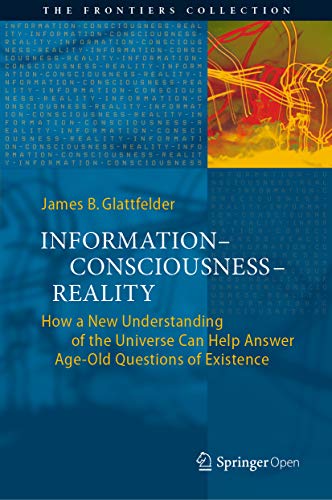
 In detail, thank you: